A beautiful South Asian bridal portrait is about more than wearing traditional clothing. It is a careful combination of fashion, jewelry, hairstyle, expression, lighting, and cultural details that creates an elegant and memorable image.
Whether the portrait is being created for a wedding, festive celebration, engagement, family occasion, or fashion campaign, the goal is to make the subject look graceful while preserving a natural appearance.
With the right styling choices, even a relatively simple studio environment can become the foundation for a luxurious bridal editorial.
Start With a Sophisticated Color Palette
Color has a major influence on the mood of a bridal portrait. Mustard gold and warm yellow are particularly effective for creating a festive and elegant appearance.
A mustard-gold lehenga, salwar suit, or traditional ensemble can provide richness without relying on extremely bright colors. Tone-on-tone embroidery adds depth while keeping the outfit sophisticated.
Pair the outfit with a neutral warm-gray or beige background. This allows the clothing to become the visual focal point while maintaining a soft, premium atmosphere.
Use Contrast Carefully
A successful color palette usually combines a dominant clothing color with a few supporting tones.
For example, mustard gold can be complemented by:
- Deep black hair
- Warm gold jewelry
- White floral accents
- Soft yellow flowers
- Natural green or muted floral details
- Cream and beige background tones
Keeping the palette controlled prevents the portrait from becoming visually overwhelming.
Create an Elegant Traditional Hairstyle
The hairstyle is one of the most important elements of a South Asian bridal portrait.
A long traditional braid can create a strong vertical line that complements the shape of the body and clothing. For a romantic appearance, the front section can be arranged into a braided crown before flowing into a long, slightly textured braid.
Keep a few delicate strands around the forehead and cheek. These loose strands can soften the overall appearance and make the hairstyle feel more natural.
Add Flowers to the Braid
Small flowers can transform a traditional braid into an editorial centerpiece.
Tiny white baby’s-breath flowers provide a delicate contrast against dark hair. Small warm-yellow flowers can then coordinate with the mustard-gold outfit.
Golden floral ornaments can be added sparingly to introduce subtle luxury without making the hairstyle look excessively decorated.
The most important principle is balance. Decorations should enhance the braid rather than hide its structure.
Incorporate Butterflies for a Dreamy Touch
Butterflies can introduce a romantic and artistic element to a bridal fashion portrait.
Yellow and orange butterflies work particularly well with mustard-gold clothing because they maintain the warm color story.
For a realistic appearance, position the butterflies naturally among the flowers and braid rather than placing them in perfectly symmetrical patterns.
Different sizes and angles can create the impression that the butterflies are interacting with the hairstyle. Their wings should have realistic texture, translucency, and subtle lighting.
Choose Traditional Jewelry Thoughtfully
Jewelry adds definition and richness to a bridal portrait.
Long jhumka earrings are an excellent choice because they frame the face and add movement. A delicate layered necklace can complement the neckline without overpowering the outfit.
Gold jewelry works especially well with mustard and yellow clothing. However, avoid adding too many large pieces at once.
Match Jewelry to the Neckline
The neckline of the outfit should influence the necklace design.
A higher neckline may work better with a shorter or more delicate necklace, while an open neckline can accommodate layered pieces.
Earrings should also complement the hairstyle. Long earrings are particularly effective when the hair is pulled back into a braid because they remain visible.
Focus on Natural Facial Expression
A bridal portrait does not always require a direct smile toward the camera.
A relaxed three-quarter pose can create a more editorial appearance. Turn the shoulders slightly away from the camera while gently turning the head back toward the viewer.
A soft, genuine smile creates warmth without making the expression appear forced.
Keep the chin slightly lowered and allow the eyes to remain relaxed. Small changes in head position can dramatically affect the overall mood of a portrait.
Use Soft Professional Lighting
Lighting should reveal the details of the face, clothing, hair, and jewelry without creating harsh shadows.
Soft diffused studio lighting is ideal for bridal photography. A gentle warm light can provide a natural glow while preserving accurate skin tones.
A subtle rim light around the hair and shoulders can separate the subject from the background.
Avoid excessive brightness on jewelry and embroidery. Gold surfaces should have controlled highlights rather than appearing completely white or overexposed.
Preserve Realistic Skin Texture
Natural skin texture is essential for a premium portrait.
Avoid excessive smoothing that removes pores and natural facial details. A realistic portrait should retain subtle variations in skin tone and natural highlights.
The same principle applies to makeup. Softly defined eyebrows, natural-looking lips, subtle cheek definition, and a small traditional Hindi can create an elegant appearance without making the face look heavily processed.
The goal is refinement rather than perfection.
Design an Editorial Collage
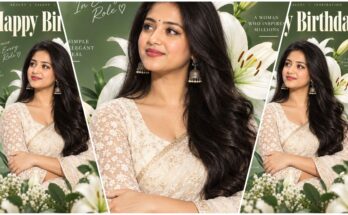
A collage layout can make a bridal portrait feel like a luxury fashion magazine spread.
Start with one main full or three-quarter portrait. Surround it with smaller vertical panels featuring carefully selected details.
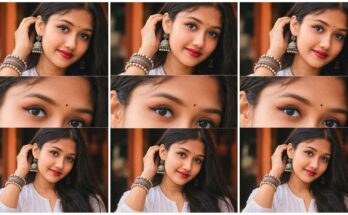
Useful crop panels can include:
- A close-up of the eyes and Hindi
- A side profile
- The braided hairstyle
- Floral decorations
- Butterfly details
- Jhumka earrings
- Embroidery and fabric texture
- Gold jewelry details
A large, low-opacity monochrome portrait behind the main image can add depth and create a sophisticated layered effect.

Create a highly realistic, elegant South Asian bridal/festive fashion portrait inspired by the attached reference image, without identifying or guessing the person's identity. Show a young adult woman with natural feminine proportions and a graceful, slender-to-average build, captured in a relaxed three-quarter side profile while gently turning her face toward the camera with a soft, genuine smile. Her facial appearance should be natural and refined, with expressive almond-shaped dark brown eyes, softly defined eyebrows, a straight delicate nose, naturally shaped lips, subtle cheek definition, a graceful jawline, warm medium-brown skin tone, and realistic natural skin texture. Add a tiny traditional bindi centered above the eyebrows.

Her hair is long, thick, glossy black, and intricately styled into a romantic traditional braid. Create a detailed braided crown/front section flowing into a long, slightly wavy braid down the back, decorated with delicate clusters of tiny white baby's-breath flowers, small warm-yellow flowers, subtle golden floral ornaments, and several realistic yellow/orange butterflies naturally positioned among the braid and flowers. Include a few soft face-framing strands around the forehead and cheek for an elegant, effortless appearance.

Dress her in a luxurious mustard-gold/yellow traditional Indian outfit, such as an embroidered salwar suit or lehenga-style ensemble, featuring intricate tone-on-tone embroidery, delicate floral motifs, fine threadwork, subtle sequins, and an ornate embroidered dupatta draped naturally over her shoulder. Add elegant traditional gold jewelry: long dangling jhumka earrings, a delicate layered necklace, and understated traditional accessories. The fabric should appear rich, lightweight, finely woven, and realistic, with visible embroidery, folds, stitching, and subtle reflective details.

Pose: relaxed three-quarter body pose, shoulders turned slightly away from the camera, head gently turned back toward the viewer, chin slightly lowered, soft smile, calm and graceful expression, one arm naturally positioned near the body. Maintain realistic anatomy, natural hands and fingers, authentic clothing proportions, and an elegant feminine posture.

Create a sophisticated editorial collage composition matching the reference: the main full/three-quarter portrait centered prominently, surrounded by several vertical photographic crop panels showing close-up details of the woman's face, side profile, hairstyle, braid, flowers, butterflies, and jewelry. Place a large, softly faded monochrome/low-opacity close-up portrait of the same subject behind the main image as a subtle background layer. Use overlapping rectangular photographic panels with clean edges and varied sizes, creating a premium fashion-magazine collage aesthetic.

Background: soft warm gray-beige studio environment with subtle creamy gradients, gentle atmospheric haze, minimal distractions, delicate out-of-focus white floral elements and faint bokeh. Use a muted neutral palette that allows the mustard-gold outfit, black hair, white flowers, and yellow butterflies to stand out naturally.

Lighting: soft diffused professional studio lighting combined with gentle warm natural window-like illumination, subtle rim light along the hair and shoulders, soft facial highlights, controlled shadows, realistic skin luminosity, and delicate highlights on the gold jewelry and embroidery. Avoid harsh shadows or overexposure.

Camera: professional full-frame fashion photography, approximately 50mm–85mm portrait lens, medium depth of field, f/2–f/3.5, realistic perspective, sharp focus on the main subject's face and clothing details, gently blurred background, natural optical bokeh, high dynamic range, accurate skin tones, realistic exposure, subtle filmic tonal response.

Style: ultra-realistic luxury Indian fashion editorial photography, cinematic portrait photography, sophisticated wedding/festive aesthetic, premium magazine campaign, photorealistic textures, realistic skin pores and fine facial details, individually defined hair strands, highly detailed embroidery and jewelry, physically accurate fabric texture, natural shadows, realistic flower petals and butterfly wings, subtle depth and dimensionality, tasteful color grading, soft warm highlights, muted neutral background, elegant and dreamy mood, refined feminine beauty, graceful, romantic, serene, sophisticated, 4K/8K detail, high-resolution professional photography, HDR, crisp micro-details, natural imperfections, no plastic skin, no excessive retouching, no artificial facial distortion, no extra fingers, no warped jewelry, no duplicated facial features, no text, no watermark.
Keep the Layout Clean
Editorial collage design works best when there is a clear visual hierarchy.
The main portrait should remain the strongest element. Secondary panels should support it rather than compete for attention.
Use clean rectangular edges, varied panel sizes, and controlled spacing. Avoid placing too many images together because excessive detail can make the composition feel cluttered.
Select a Neutral Background
A warm gray-beige studio background provides a sophisticated foundation for bridal fashion.
Subtle gradients, atmospheric haze, soft Booker, and out-of-focus white flowers can add depth without distracting from the subject.
The background should remain quieter than the clothing and face.
This is especially important when the portrait already contains detailed embroidery, jewelry, flowers, butterflies, and multiple collage panels.
Choose a Natural Camera Perspective
A 50mm to 85mm portrait lens is a strong choice for this style.
These focal lengths can provide flattering proportions and reduce the distortion associated with very wide lenses.
An aperture around f/2 to f/3.5 can provide a pleasing balance between subject sharpness and background softness.
For a collage, capture different compositions separately. Use tighter framing for jewelry and facial details and wider framing for the main portrait.
Capture Fine Details
High-quality bridal photography depends on small details.
Make sure embroidery has visible thread patterns and realistic stitching. Fabric should show natural folds and subtle texture.
Hair should contain individually defined strands rather than appearing like a single smooth surface.
Flowers should have believable petals, shadows, and variations in size. Jewelry should reflect light naturally.
Even small contact shadows can improve realism, particularly around clothing, jewelry, and overlapping elements.
Final Thoughts
Creating an elegant South Asian bridal portrait requires a balance between traditional beauty and modern editorial presentation.
Begin with a coordinated mustard-gold outfit, a detailed traditional braid, delicate flowers, and carefully selected gold jewelry. Add a natural three-quarter pose and a soft expression to create an authentic sense of grace.
Then use diffused lighting, realistic skin texture, natural fabric details, and a warm neutral background to give the portrait professional depth.
For an especially distinctive presentation, introduce a tasteful editorial collage with close-up details of the face, hairstyle, jewelry, flowers, and embroidery.
The strongest results come from restraint. Every element should support the subject rather than compete with her. When traditional styling, thoughtful composition, realistic textures, and elegant lighting work together, the result can feel both culturally inspired and timelessly sophisticated.