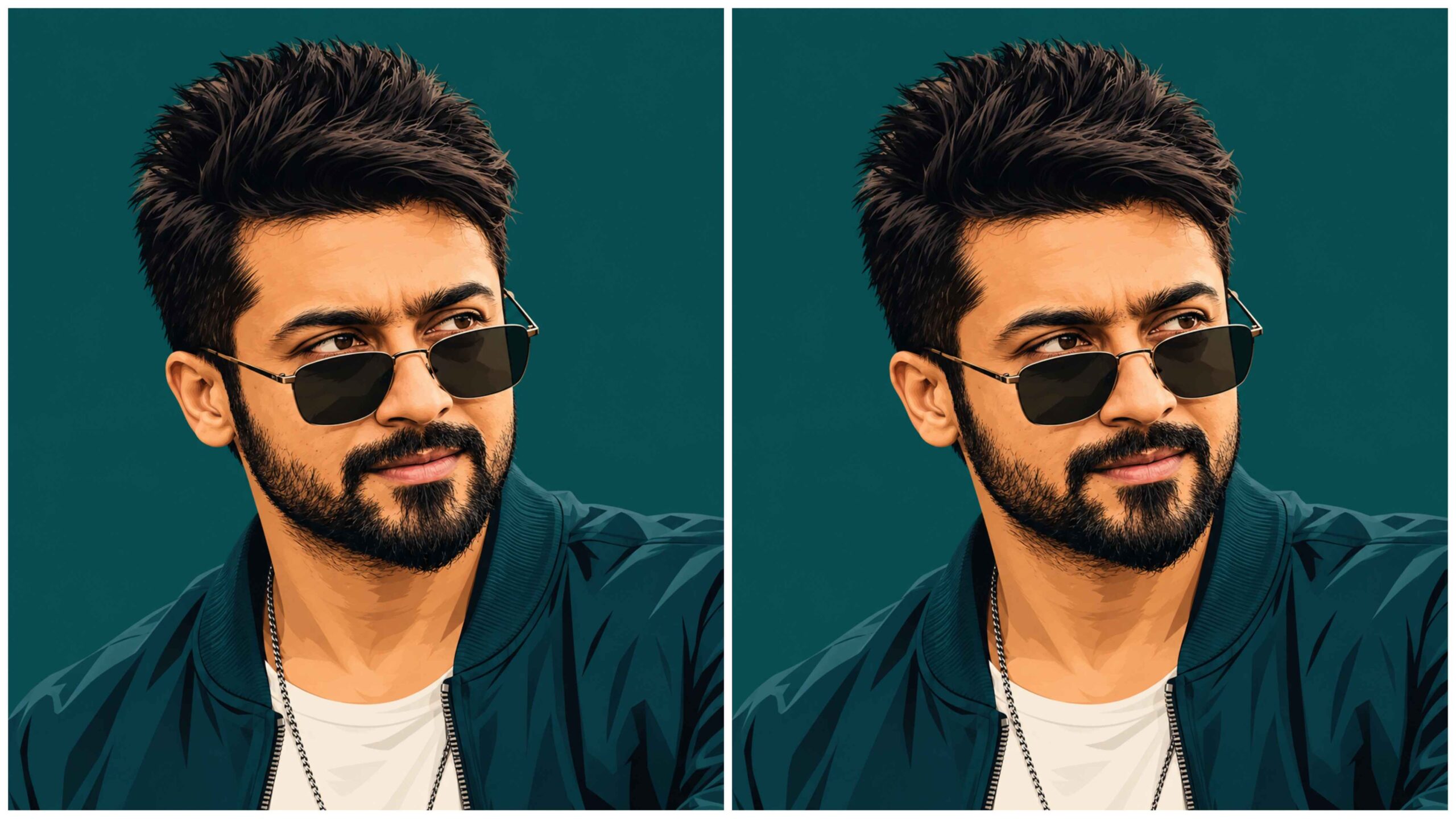
A 3:4 vector portrait blends recognizable facial details with a clean, modern illustration style, ideal for profile pictures and branding. It suits posters, social media graphics, thumbnails, and personal branding.
The key is balancing accurate facial structure with simplified shapes, strong outlines, controlled colors, and a well-planned composition. Choose a reference photo and decide on pose, clothing, and background elements.
This guide explains the process from selecting a reference to color palette and polishing the final portrait. It helps you preserve personality and distinctive features while achieving a polished result.
A well-designed portrait can say a lot without words. When a realistic photograph is transformed into a bold vector illustration, recognizable facial features can be combined with a stylish editorial appearance.
The 3:4 vector portrait format is useful because its vertical composition provides enough space for the face, shoulders, clothing, and background while still working naturally for many digital platforms.
For a 3:4 vector portrait, creating a strong result isn’t simply about adding bright colors. Facial proportions, expression, hairstyle, clothing, lighting, and composition all need to work together.
3:4 Vector Portrait Overview
What Is a 3:4 Vector Portrait?
Uses and Applications
A 3:4 vector portrait is a vertical illustration where the image width-to-height ratio is 3:4. Instead of relying on photographic textures, the design uses simplified shapes, clean outlines, controlled shading, and solid color areas.
For example, a 3:4 canvas can be used to create a portrait. It shows:
- The person’s head and shoulders
- A three-quarter facial angle
- Distinctive hair and beard details
- A stylish jacket or shirt
- Minimal accessories
- A flat, bold background
The objective is to simplify the photograph while keeping the person’s important visual characteristics recognizable.
Start With a High-Quality Reference Photo
The reference photograph is one of the most important parts of the process.
Choose an image where the face is clearly visible and isn’t heavily covered by shadows, filters, or objects. A sharp photograph makes it easier to observe the facial structure and distinctive characteristics.
Pay particular attention to:
Facial Structure
Look at the overall shape of the forehead, cheeks, jawline, chin, and ears. These proportions should remain consistent when converting the photograph into an illustration.
Eyes and Eyebrows
The eyes strongly influence recognition and expression. Their spacing, shape, direction, and eyebrow position should be represented carefully rather than replaced with generic features.
Nose and Lips
The nose and mouth can be simplified into clean vector shapes, but their proportions and placement should remain close to the reference.
Beard and Facial Hair
If the subject has a beard or mustache, avoid treating it as one completely flat shape. A few carefully positioned vector sections can communicate the direction and density of the facial hair without creating unnecessary detail.
Choose a Three-Quarter Pose
A three-quarter pose is particularly effective for an editorial portrait.
Instead of facing directly toward the viewer, the head is turned slightly to one side. This creates more depth and allows the jawline, nose, cheekbone, and hairstyle to become visually interesting elements.
A natural pose can include one shoulder slightly forward while the head remains relaxed.
The expression should also feel intentional. A subtle smile or confident expression often works better than an exaggerated grin when the goal is a sophisticated poster aesthetic.
Use Bold Flat Colors
Color is one of the defining features of a modern vector portrait.
Rather than using dozens of subtle shades, select a controlled palette with a dominant color and one or two supporting tones.
For example:
- Deep teal: jacket and background
- Off-white: T-shirt
- Warm skin tones: face and neck
- Dark charcoal: hair, beard, and sunglasses
- Silver: necklace or small accessories
Deep teal works particularly well for an editorial appearance because it creates strong contrast with warm skin tones.
Other possibilities include burnt orange, charcoal, burgundy, navy, or dark green.
Keep the Background Simple
A flat background can make the portrait look much more professional.
Instead of adding scenery, textures, gradients, or complicated objects, use one strong monochrome color that complements the clothing.
The background should support the subject rather than compete with it.
For a teal jacket, for example, a darker teal background can create a cohesive visual identity while allowing the face and lighter shirt to stand out.
Create Clean Vector Line work
Clean lifework is essential for achieving the poster-style appearance.
Avoid excessive outlines around every small facial detail. Use stronger lines where they improve definition, such as:
- Jawline
- Hair edges
- Eyebrows
- Beard outline
- Jacket collar
- Sunglasses
- Major facial shadows
Smaller details can be represented through simple shapes and controlled color changes.
The result should feel deliberate rather than overly complicated.
Add Minimal Shading
Flat vector artwork doesn’t have to look completely flat.
A few carefully placed shadow shapes can give the face dimension while preserving the graphic style.
Useful areas for subtle shading include:
- Under the eyebrows
- Around the sides of the nose
- Beneath the lower lip
- Along the jaw
- Under the chin
- Around the hairline
The important point is restraint. Too much shading can make the illustration look more like a digital painting than a crisp vector poster.
Select Clothing That Supports the Portrait
The outfit should complement the face rather than distract from it.
A structured bomber jacket, casual shirt, or simple collared jacket can create a fashionable appearance without requiring complicated patterns.
A good combination might include a saturated teal jacket with a lighter fitted T-shirt underneath.
Keep accessories minimal. A thin chain, classic watch, or understated sunglasses can add personality without overwhelming the composition.
Use Sunglasses Carefully
Vintage-style sunglasses can give a portrait a distinctive editorial character.
Round, square, or slightly rectangular frames can work well. Positioning them slightly down the nose can create a relaxed and playful expression.
However, sunglasses shouldn’t completely hide the facial features if facial resemblance is a priority. The eyes and eyebrows are important recognition points, so the glasses should complement the portrait rather than dominate it.
Build the 3:4 Composition
Composition determines how the finished illustration feels.
Place the subject primarily in the lower two-thirds of the canvas while leaving some headroom above the hair.
This creates negative space around the head and prevents the portrait from feeling cramped.
A useful composition can include:
- Solid background filling the entire canvas.
- Head positioned slightly above center.
- Shoulders extending toward the lower edges.
- One shoulder subtly closer to the viewer.
- Enough space above the hairstyle.
- Minimal distractions around the subject.
This approach creates a polished poster-like layout.
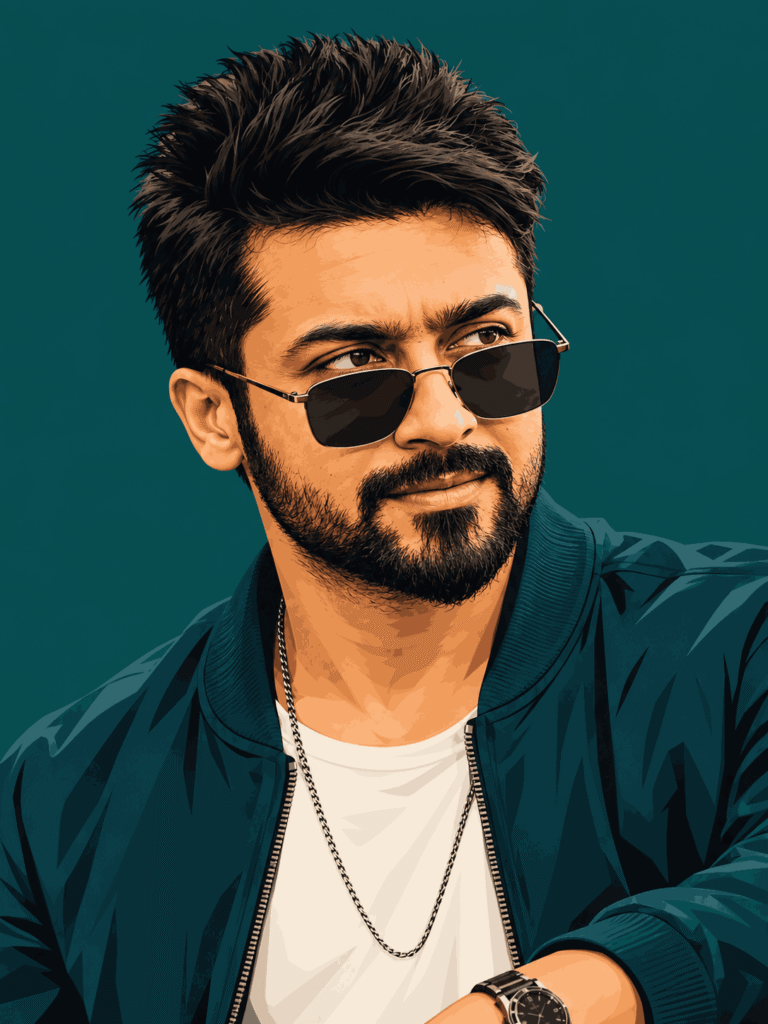
Create this as a 3:4 vertical portrait image. Using the attached reference photo, recreate the person's face with high precision - exact facial structure, eyes, nose, lips, jawline, beard/facial hair (if any), and skin tone matching the reference photo closely, side-profile or three-quarter angle as shown. Style: bold flat vector illustration, clean smooth linework, minimal shading, poster-art aesthetic - no painterly texture, crisp digital vector finish. Pose: head turned slightly to the side in a relaxed three-quarter profile, one shoulder forward, warm charming smile - natural, confident, slightly playful, eyes gently engaged. Hair styled neatly matching the reference (textured, swept back, or tousled as shown). Outfit: sharp casual-formal look - a solid-color bomber jacket or structured shirt in a single bold monochrome tone (deep teal, burnt orange, or charcoal - pick one saturated color), plain fitted t-shirt or collared shirt underneath in a lighter contrasting shade, minimal accessories (thin chain necklace or wristwatch), round or square vintage-style sunglasses pushed slightly down the nose. Background: solid bold monochrome color matching the outfit's color family, completely flat with no texture or gradient, high contrast, poster-style minimalism. Composition: subject positioned in the lower two-thirds of the frame with headroom above, generous negative space around the head, fully filling the 3:4 vertical frame, clean poster-quality layout. Style: flat vector illustration, bold saturated color palette, minimal linework, high-fashion editorial poster quality, confident, charming, and stylish mood.
Where to Use a Vector Portrait
A professionally designed 3:4 vector portrait can be adapted for many purposes.
Social Media Profile Graphics
A bold illustration can provide a distinctive personal-branding style across social platforms.
YouTube and Content Branding
The portrait can be incorporated into channel graphics, thumbnails, banners, or promotional artwork.
Posters and Digital Artwork
The clean composition makes vector portraits suitable for posters, wallpapers, promotional designs, and editorial-style graphics.
Personal Branding
A consistent illustration style can help create a recognizable visual identity across different online platforms.
Final Tips for a Better Result
Before finishing the artwork, check the portrait at both full size and thumbnail size.
At full size, inspect the facial proportions, beard edges, hairline, sunglasses, and clothing.
At thumbnail size, check whether the face and overall silhouette are still immediately readable.
Most importantly, don’t sacrifice recognizable facial characteristics simply to make the artwork more stylized. The strongest illustrations simplify the photograph while preserving the features that make the subject visually distinctive.
Conclusion
A 3:4 vector portrait is an effective way to transform a personal photograph into a bold, modern piece of visual artwork. The best results come from combining accurate facial proportions with simplified shapes, clean lifework, controlled shading, and a strong color palette.
Start with a clear reference photo, carefully preserve the important facial characteristics, and use a relaxed three-quarter pose for added depth. Choose one dominant clothing color, keep the background flat, and use accessories sparingly.
With thoughtful composition and consistent styling, a simple photograph can become a polished editorial-style portrait suitable for social media, personal branding, posters, and digital artwork.